
23 februari 2026 - 1 reacties
Page in English only
I recently purchased an Anytone AT-D890UV handheld, and since it offers full duplex capability, I decided to started looking again for a portable satellite antenna that would allow me to fully take advantage of the radio’s full duplex operation during satellite passes.
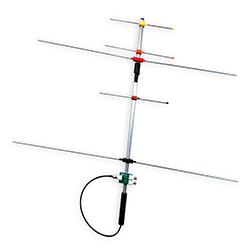
I came across the ARRL Dual-Band 2 m/70 cm Handheld Yagi Antenna on the ARRL website. The description highlighted that this handheld directional antenna can be used for making satellite contacts and offers excellent gain for its size. However, this antenna would need to be shipped all the way from the United States, and I was also curious about its exact dimensions. That prompted me to continue searching for this antenna on the internet.
In the past, I had seen antennas made from tape measures, and since I wanted an antenna that was as lightweight as possible — and to build myself — I continued my search on Thingiverse, as I would likely need to 3D print the element mounting brackets.
The search quickly produced several results. In addition to references to the original designer of the antenna, DK7ZB, I found a drawing with the exact dimensions and several mounting bracket designs. I even found one that included the SCAD files. This gave me the opportunity to make small modifications, such as adapting the brackets for a 19 mm boom diameter, reducing the size, and simplifying the overall design.
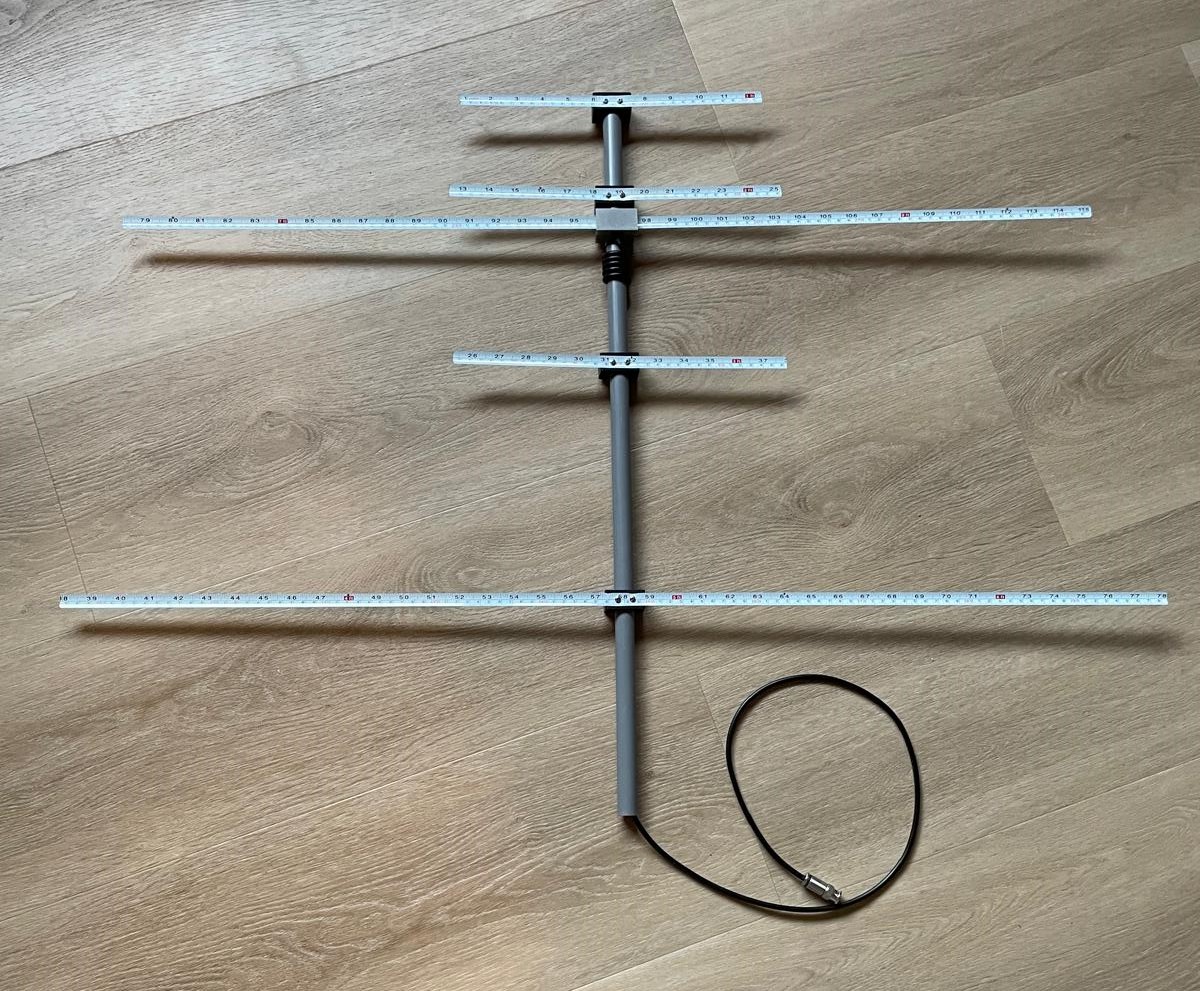
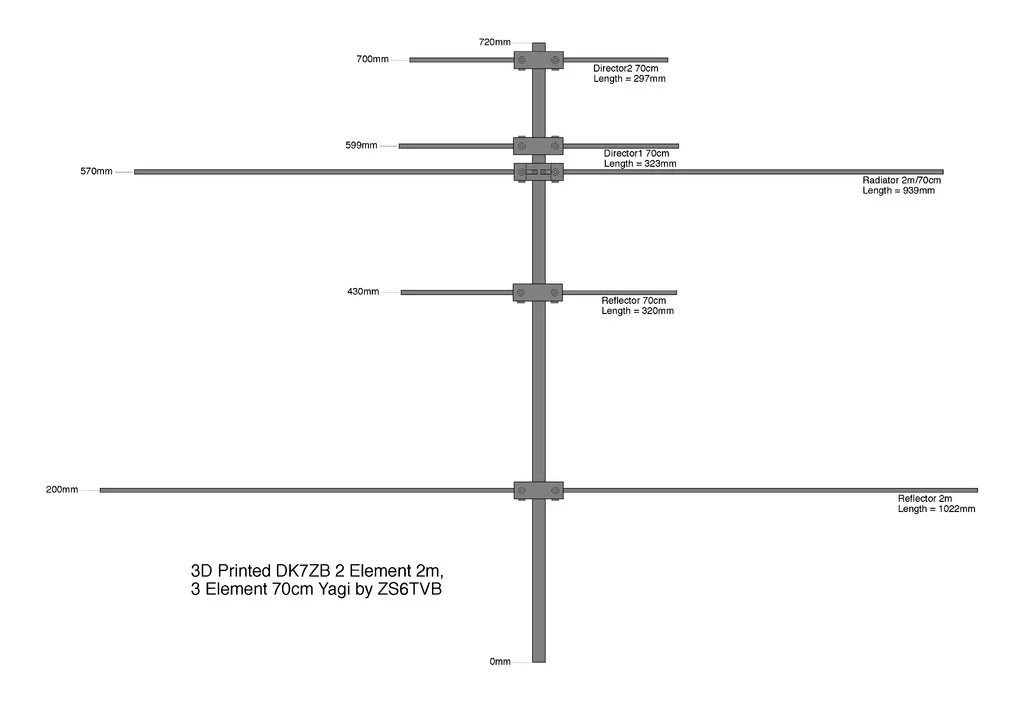
The antenna consists of two elements for the 2m band, with the front element acting as the driven element (radiator), to which the coax is connected. A five-turn choke is used to prevent common-mode currents on the feed line. The claimed gain is 4.1 dBd for the 2m band and 6.2 dBd for the 70 cm band.
For the 70cm band, the antenna has three elements. The center element is a parasitic element mounted directly next to the 2-meter driven element. (see below for further explanation)
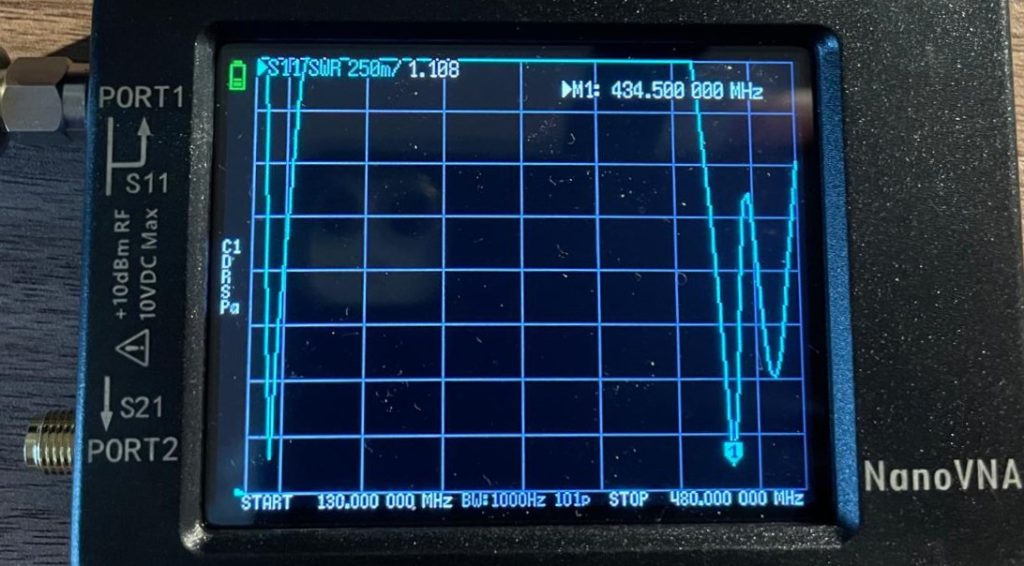
In the meantime, I noticed on the AMSAT SA website that it was possible to purchase the same antenna (similar to the ARRL one) at a much lower price. However, after making inquiries, I learned that the shipping costs were more than twice the price of the antenna itself. A group purchase could potentially be a solution to reduce the overall cost.
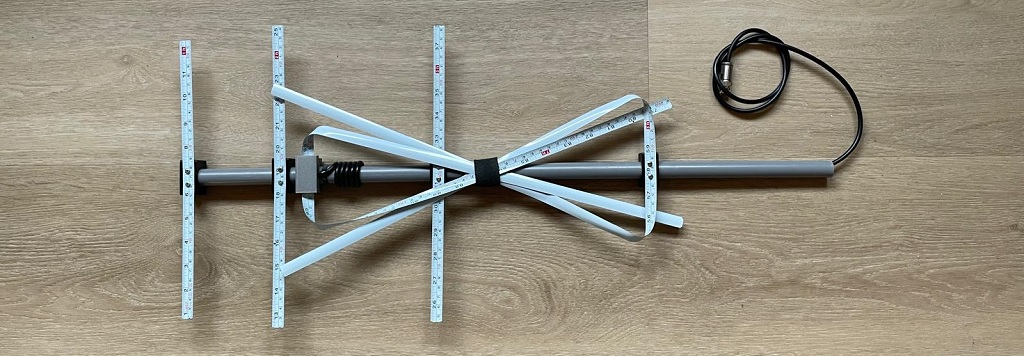
In the end, my version did not cost me anything. I had purchased the tape measure years ago from a well-known Swedish furniture store, and all the other materials were already available in my workshop.
I modified the tape measure bracket design by eliminating the M3 nut-bolt to fix the bracket to the boom and redesigning the way the tape measure itself is secured. Instead with 2 x M3 nut-bolt, they are now fastened using two self-tapping screws that also punch into the boom. The original design also included a hole for a magnet, probably to aid in transportation, but since I didn’t have any magnets on hand, I omitted these holes.
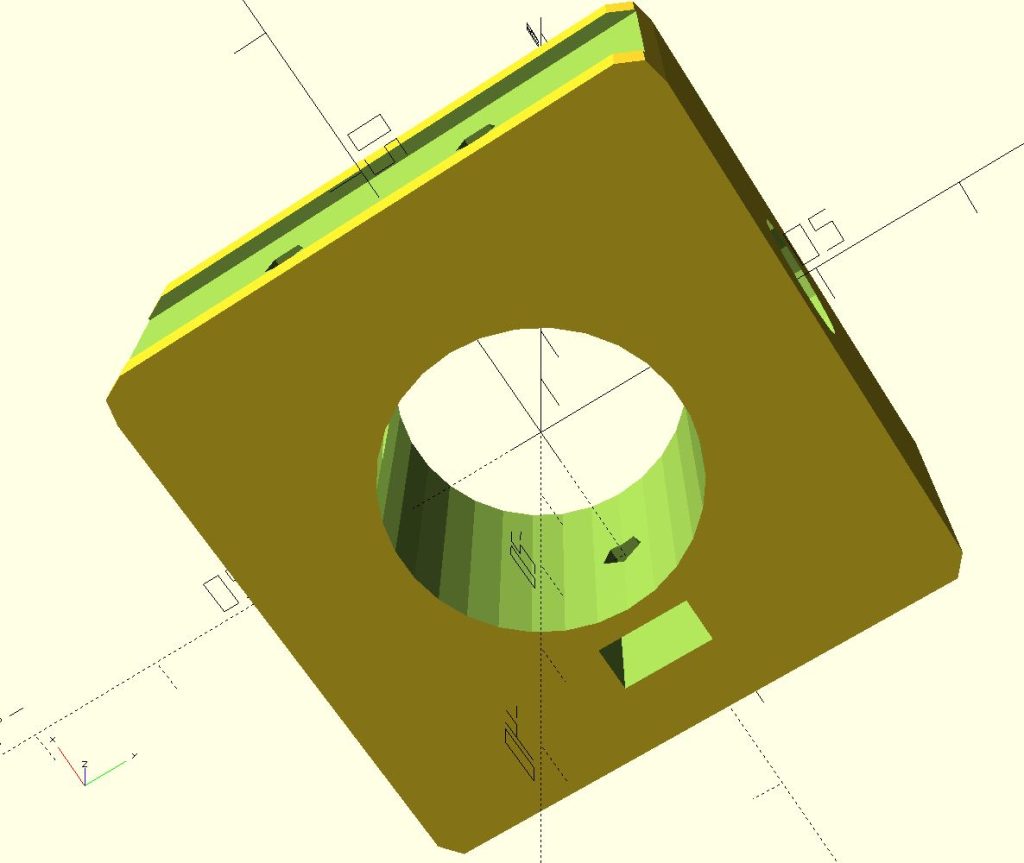
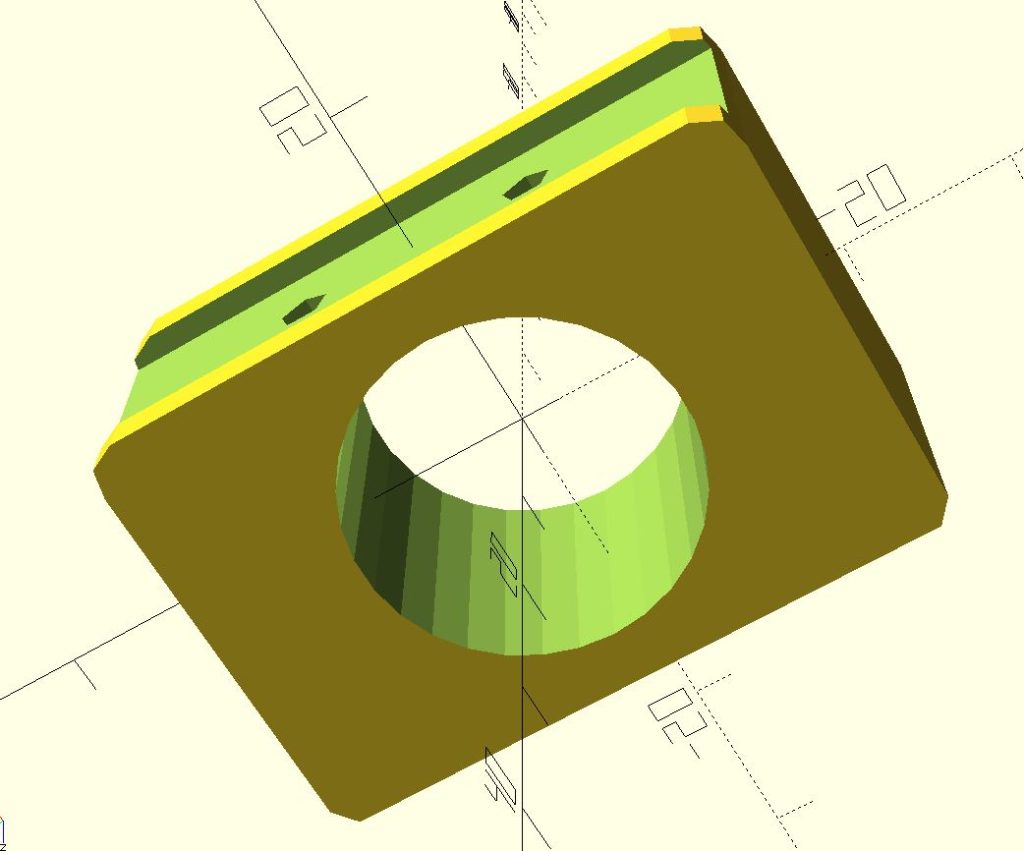
Here is a link to the original Thingiverse design by Ondřej Koloničný, OK1CDJ. He has many more interesting 3D designs in his portfolio. Another useful link is to Theo Bresler, ZS6TVB, which contains the antenna measurements in his design. The brackets are 3D printed using a Creality Ender 3 V3 KE 3D printer and 1.75 mm PLA filament.
The total weight of the self-built version is 225 grams, which is significantly lighter than the Elk and Arrow satellite antennas I have used in the past. Those antennas tended to feel quite heavy after about 10 minutes of use. My version does not include a duplexer, unlike the ARRL version, as my Anytone handheld does not need one. I may add a handle grip in the future.
Finally, a brief explanation of the antenna’s operating principle. It is a very compact design, and by intelligently exploiting parasitic coupling effects, dual-band operation is achieved using a single antenna and a single feed line.
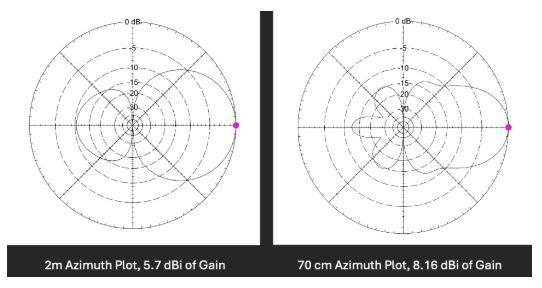
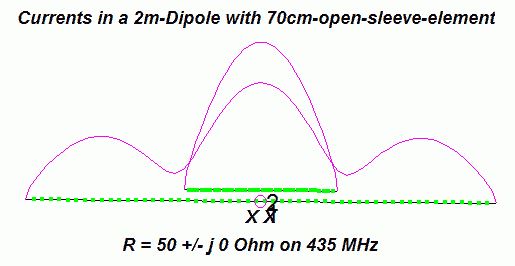
From the DK7ZB website, where Martin explains the construction principles of this dual-band antenna:
“An interesting phenomenon is the 3/2-lambda resonance of 2-m-elements on the 70-cm-band. A dipole for 2m has a very interesting azimuth pattern on 70cm. Now we add the 70-cm-open-sleeve-element to the 2-m-dipole. The currents change and we have the highest current in the parasitic fed open-sleeve element. With the correct distance we get one feedpoint for two bands, on 70 cm with 50 +/- j 0 Ohm. We can use this open-sleeve-construction as the radiating system in a Yagi for two bands.”
Conclusion of an afternoon build:
By using a plastic boom and tape measure elements, the antenna can be built very easily while remaining extremely lightweight, agile, and convenient to use. It is not ideal in very strong winds — but then again, you probably wouldn’t want to be outside operating in those conditions anyway. 🙂
Well done Johan! Tks for your effort to write it all down. It inspires me!