17 januari 2026
Page in English only
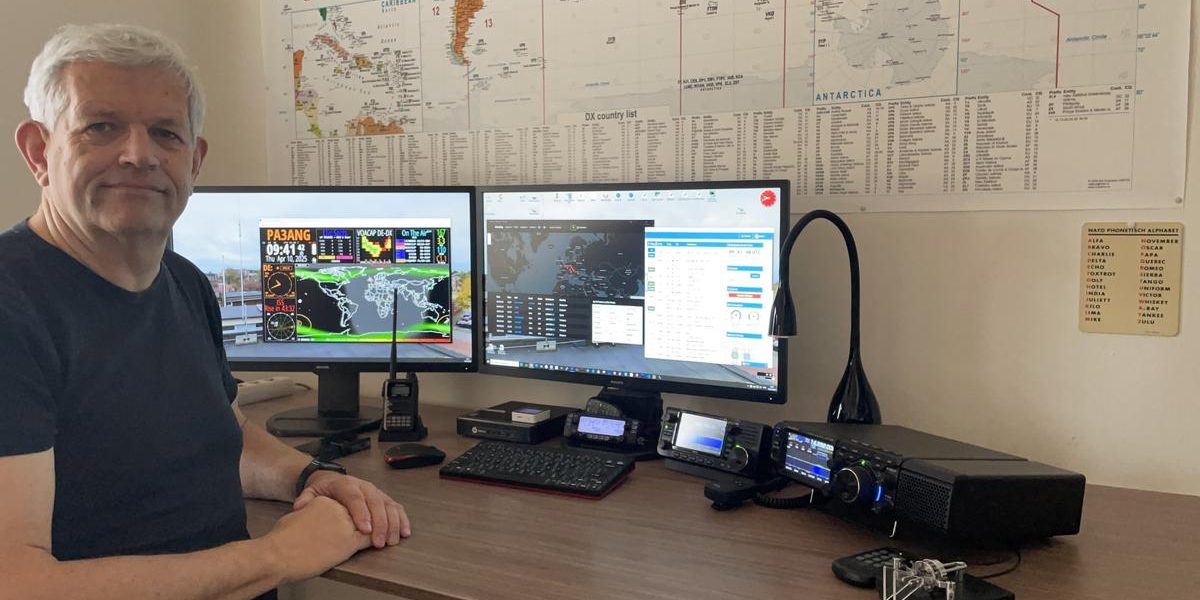
Licensed in 1977 as PD0CJH (novice licence), followed by PE1BQP, and since 1979 holding the current full licence callsign PA3ANG. I started in 1972 already as an SWL with IDs NL4196 and PA-2112.
Active on most HF bands and worked 273+ DXCC entities in mixed modes, including FT8. Made QSOs via the OSCAR satellites, both linear and FM birds, from UO-14 up to current operational satellites, and was quite active with DV modes, both as a user and as a repeater operator.
I have never been an avid DXer, but was more interested in RF engineering, equipment, propagation, and communications, and especially ham radio at the intersection of radio technology and the internet. From 2003 to 2013, my website onlinereceivers.net was online, featuring tunable HF receivers from all over the world. This was before WebSDR became widely available.
In the past, I’ve traveled a lot, often with a radio in my luggage. Highlights included the HB0/PA3ANG activity in 2002 and operating from Curaçao as PJ2/PA3ANG in 2008.
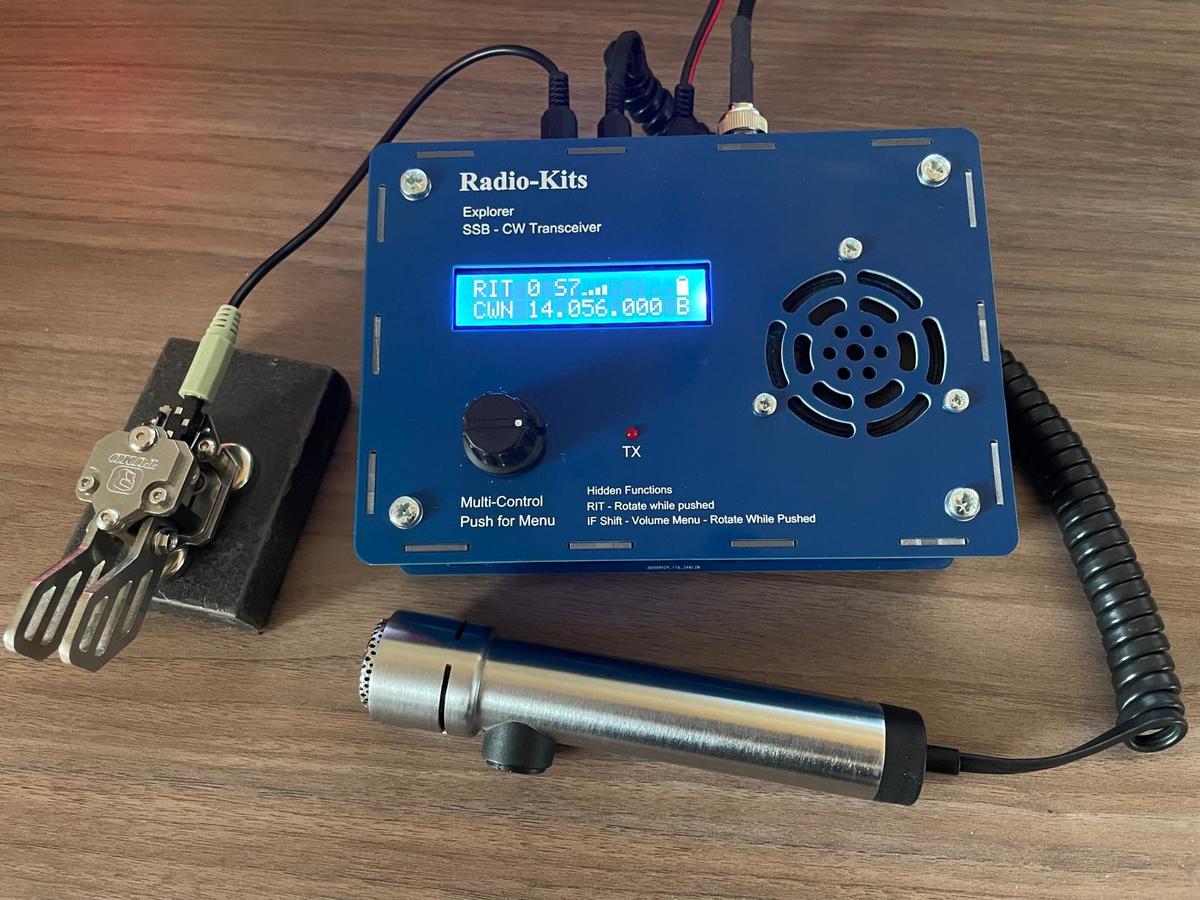
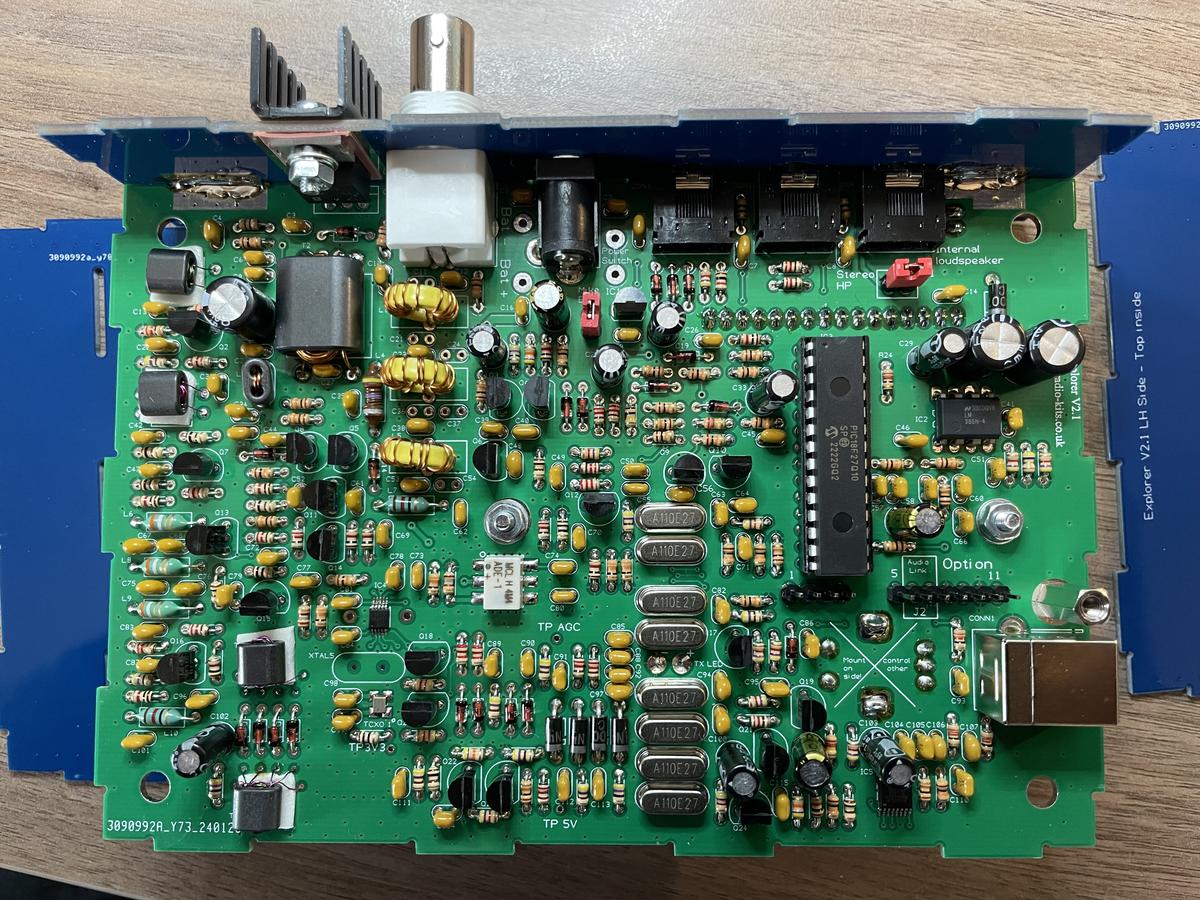
One of my latest project is building this transceiver for 20 meters called the Explorer. The kit is sold by Radio-Kits in the UK. It has mostly through-hole components and only a few premounted SMD. Fun to build and it brings back memories of those Heathkit days. The transceiver performs very well in both CW and USB and has a solid 5 watt output.
Stationery equipment:
| Equipment | Model / Accessories | Usage |
|---|---|---|
| Transceiver | Yaesu FT-710 AESS, M-70 desktop microphone, FH-2, Bencher BY-1 (Optional: Kenwood AT-130 ATU) | Main HF rig |
| Transceiver | Icom IC-705 with mAT-705 antenna tuner and Diamond MX-62M diplexer | Primarily for QO-100 with SG Lab transverter |
| Transceiver | Icom IC-2730 (full duplex) | |
| Transceiver | Kenwood TM-531 | 23 cm FM for local repeaters |
| Transceiver | Home-built QRP Labs QMX+ including GPS receiver | Very quiet receiver, ideal for channel monitoring and FT8 operation |
| Transverter | Home-built with SG Lab components: 2300/432 MHz transverter V1.4 and 20 W PA V3 | QRO.CZ LNB 10489-432, Triax 60 cm offset dish with IceCone 3.5 Helix |
| Receiver / Scanner | Uniden UBC125XLT | Airband scanning receiver |
| Receiver | SDRplay RSPdx | Wideband SDR using SDRconnect |
| Antenna | Hofi GPA-30, radials, 4 m above ground | 20 / 15 / 10 m (+ 6 / 4 m) |
| Antenna | Homemade EndFed, 20 m wire, 1:49 balun | 40 m (+ 20 / 15 / 10 m) |
| Antenna | Diamond X5000 with diplexer | 2 m / 70 cm / 23 cm |
| Antenna | Anjo URMAL270 | Portable dual-band dipole |
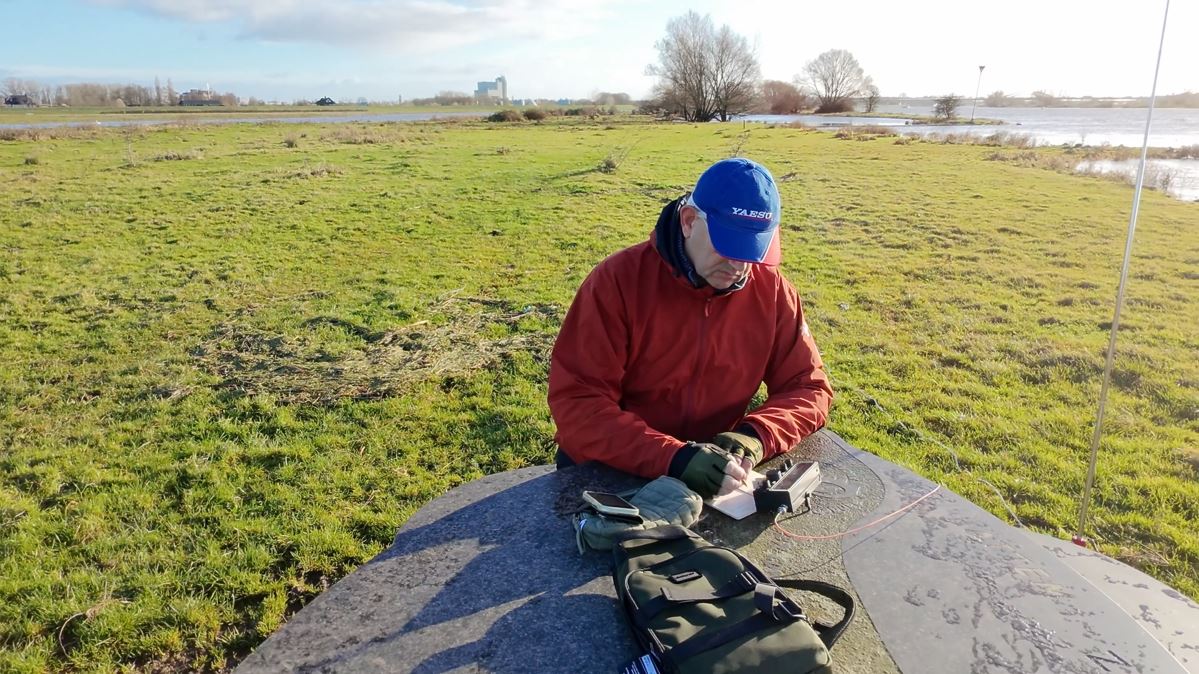
When portable, I’m often QRV in my neighborhood, near the river IJssel in the area known as Vreugderijkerwaard. Although it’s not an official POTA or WWFF reference, it’s still fun to operate in this not RF disturbed environment. (Location on Google Maps). The photo and video where made with a DJI Neo drone.
Portable equipment:
| Equipment | Model / Accessories | Usage |
|---|---|---|
| Transceiver | Elecraft KX2 fully equiped with paddle, ATU, hand microphone, Li-ion battery. | Transportable in a Pelican case or the sling bag. |
| Transceiver | QRP Labs QMX (60/40/30/20/17/15m) with Palm Radio Pico Paddle. | Carried in a sling bag. CW usage only;occasional FT8 using FT8CN. |
| Antenna | 5 meter telescopic whip with radials. | Ultra portable; no suspension needed. Simply stake it into the ground. |
| Antenne | QRP Guys no-tune EndFed with wirelenghts for 40m and 20m and 6 meter fiberglass telescopic mast. | Used when space (and trees) are available. |
| Portable | Standard C701 tri-band handheld (144/430/1200 Mhz). | 100 mWatt with airband reception. Extreme compact. |
| Portable | Yaesu FT-70DE with spare battery, fast charger, and SSM-17A speaker/microphone. | Robust general-purpose handheld with C4FM capabilitity. |
| Receiver | Icom R6 Communications Receiver. | Wide band receiver with fast scanning. Ideal for field use. |
During portable operations, I use the Ham2K PoLo app on my iPhone for logging and to access the POTA and WWFF clusters

I still have a working A510 Wirless Station. With this rig my dad PA3ABH, operated a CW QRP beacon on 80 and 40 meters (see blog for details). The A510 has a home-made power supply built into the battery compartments, and crystals for 3575, 3705, 7020 and 7030 kHz.
Specific QO-100 information:
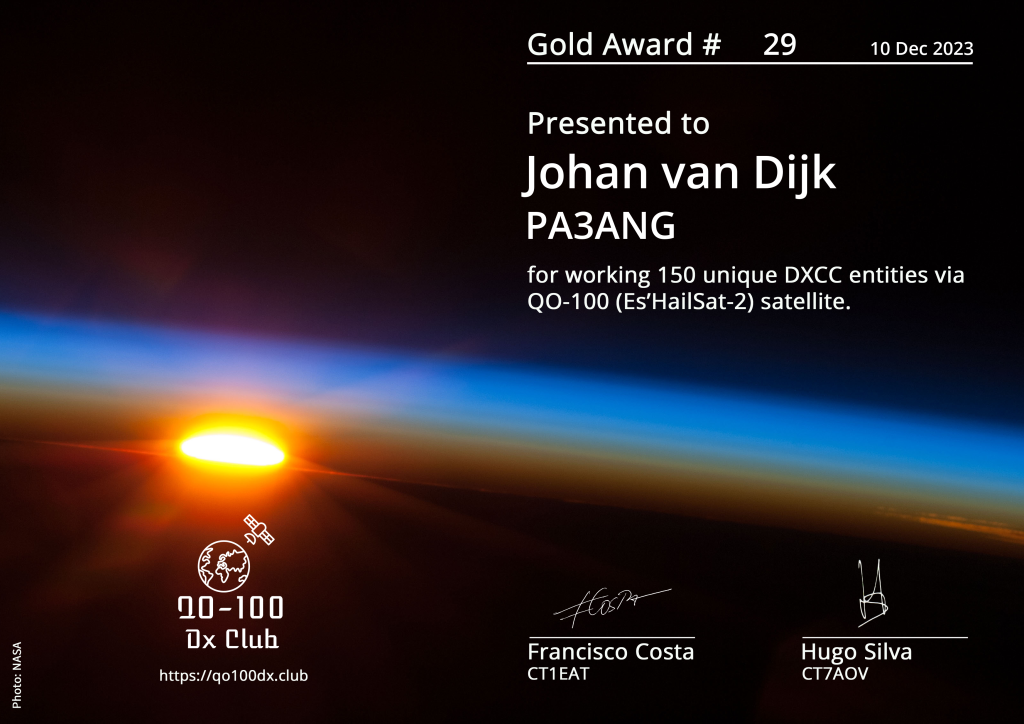
I started my activity on QO-100 in January 2020 and because of the COVID-19 pandemic, many stations were active. I have a lot of fun both experimenting and making QSO’s with this geo stationair satellite and with the help of the QO-100 Dx Club worked enough stations for obtaining DXCC 150 in December 2023.
My QO-100 setup is very straighforward and consist of the SG-Lab transverter + amplifier for the uplink with about 12 watt into a 3,5 winding Helix in front of a 60cm offset Triax dish. The downlink is a LNB from RemoteQTH.com which built-in TCXO converts directly to 70cm and is mounted on the Ice Cone Feed. The used rig is the IC-705 on 432MHz switched in duplex mode. More details about my QO-100 experiments at: pa3ang.nl/qo-100.
Current DXCC status: worked 163 out of 166 activated on QO-100 and all confirmed via LoTW, eQSL or OQRS.